YMCA Tennis & Pickleball Members,
We are writing to share the background and overview of our current capital planning work related to the YMCA’s property on Patterson Street. Our goal is to share this information in a spirit of transparency and ensure that everyone hears the same message.
This is a long note because it reflects an evolution that has taken place over many years. In this note we hope to answer several core questions: -
What is the history of the Y’s property on Patterson Street?
- What is the current focus at the Tennis & Pickleball Center?
- What is the long-term plan for the Y’s property on Patterson Street?
If you were unable to attend the Tennis & Pickleball Center listening session on Wednesday, Feb. 25, 2026, you're welcome to review the presentation and meeting minutes. Frequently Asked Questions offer a quick overview. |
|
|
Core Historical Dates Related to the Y on Patterson Street |
|
|
| Eugene School District 4J agreed to lease school-owned property across from South Eugene High School to the Y.
Newspaper articles from the time show Y leaders responding to community questions related to the lease, particularly questions about long-term development. Some members of the community expressed concern that the Y might eventually build dormitories for college students or even a hotel. These appear to have simply been community concerns; we have no internal records indicating that Y leaders ever considered such developments.
The lease covered the property between 20th and 23rd on the east side of Patterson.
The agreement was structured as a 75-year lease with an option for the Y to purchase the property.
The Y purchased the entire property from 4J in June 1979.
|
|
|
| Ground was broken for the Patterson Y.
Estimated cost: $525,000.
The plans were approved by the National Council of the YMCA’s design team (today known as Gro Development, a firm that specializes in YMCA facility design).
|
|
|
| A six-week remodel of the Tennis Center began. As part of this remodel, pickleball lines were added to a single court.
At the same time, the Y took out a $591,000 loan to address roof repairs at the main Y and remodel costs at the Tennis Center. The Tennis Center portion totaled $414,498.
Roughly $100,000 to $150,000 was raised by the tennis community to support this remodel.
|
|
|
| The Register Guard reported that the Y planned to build two additional indoor tennis courts on Patterson after the new Y was built.
The article estimated the new Y at $20 million and the additional courts at $2–$2.5 million.
The new Y ultimately opened in December 2023 with an actual cost of roughly $49 million.
|
|
|
On July 1, 2024, the Y’s current three-year strategic plan went into effect. The plan is grounded in community insights, including stakeholder interviews conducted by Y board members. One important component of this plan involves preparing for the Y’s next capital campaigns.
To support this work, the board formed a Capital Assessment Task Force (CATF) in August 2024, composed of four board leaders and four staff leaders.
In October 2024, the Y entered into a contract with Gro Development, an organization specializing in helping Ys navigate the early phases of facility expansion and development. Gro has worked on hundreds of YMCA projects nationwide and has been a close partner with our organization for many years, including helping develop the vision for the Don Stathos Y. Gro brings expertise through: - Experience with hundreds of YMCA facility projects
- Insight into current facility design trends
- Access to national membership data
- Understanding which Ys are thriving and why
- Extensive construction cost benchmarks, including those related to the Stathos Y
This expertise allows Gro to help Ys quickly develop conceptual designs, connect with peer Ys to learn from their experiences, create renderings, and model financial forecasts for potential projects.
Our Y has worked with Gro for nearly a decade. During this time they have made multiple trips to Eugene, participated in CATF discussions, and presented regularly to the Y’s board.
The contract with Gro was made possible through a generous donation from two long-time philanthropic supporters of the Y.
Gro’s work with our Y focuses on both north Eugene planning and Patterson Street planning, though this letter focuses specifically on Patterson.
Early in the CATF process, three priorities became clear: |
|
|
| The Y’s capital plans needed to involve Patterson Street and the creation of a second full-service facility. |
|
|
|
The Patterson campaign should be intentionally kept relatively small. Nearly $100 million in community-focused capital investment has taken place in south Eugene through the Stathos Y and Kidsports. As we look ahead, we want to ensure that the Y’s next major campaign focuses on traditionally underserved areas of our community.
While no formal cap has been set, the general expectation has been that the Patterson campaign would likely be less than $10 million. |
|
| | The Patterson campaign must address core community needs in ways that create meaningful impact and inspire broad community support. |
|
|
After several months of discussion with the CATF, Gro presented two concepts in February 2025. |
|
|
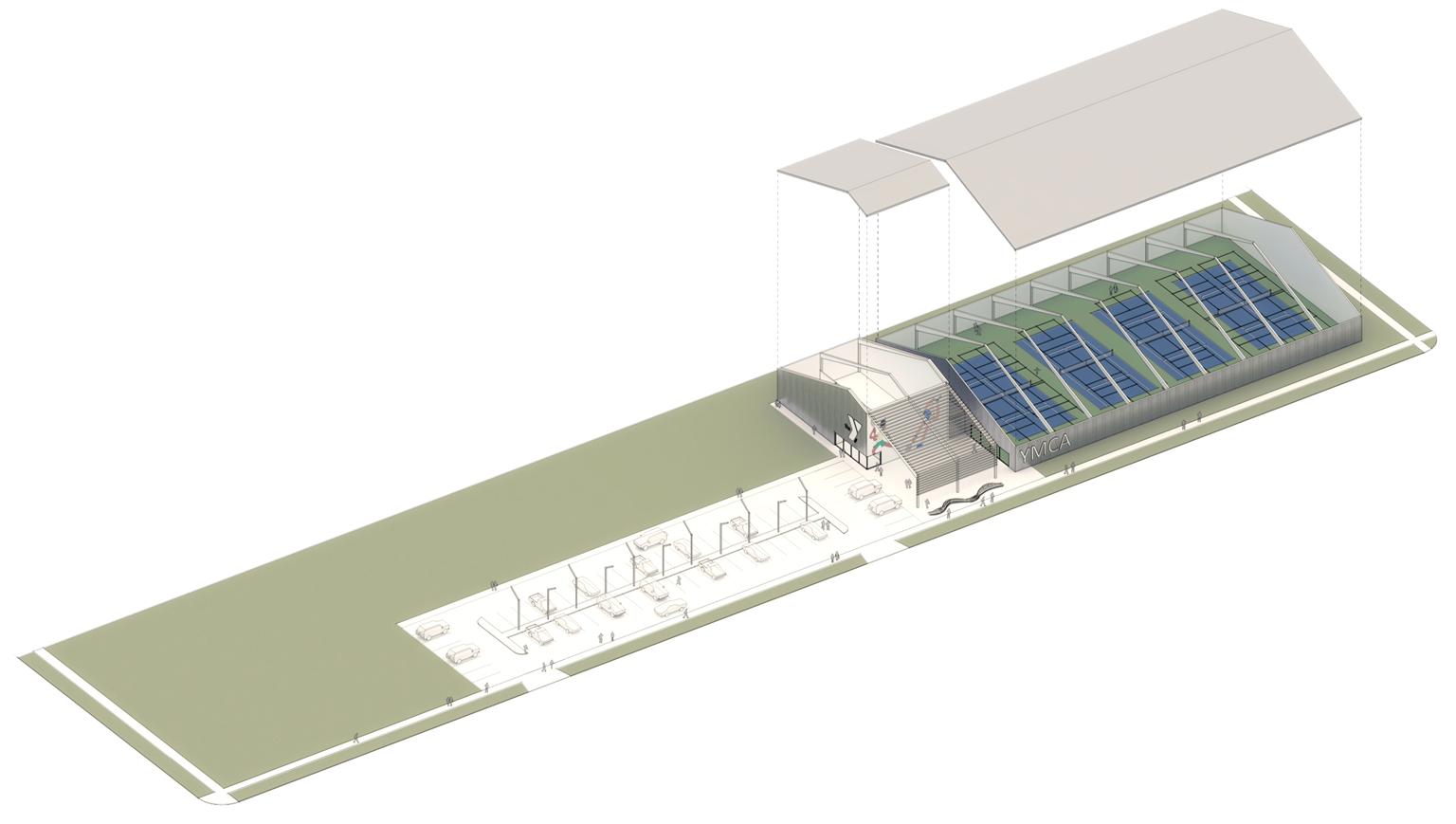
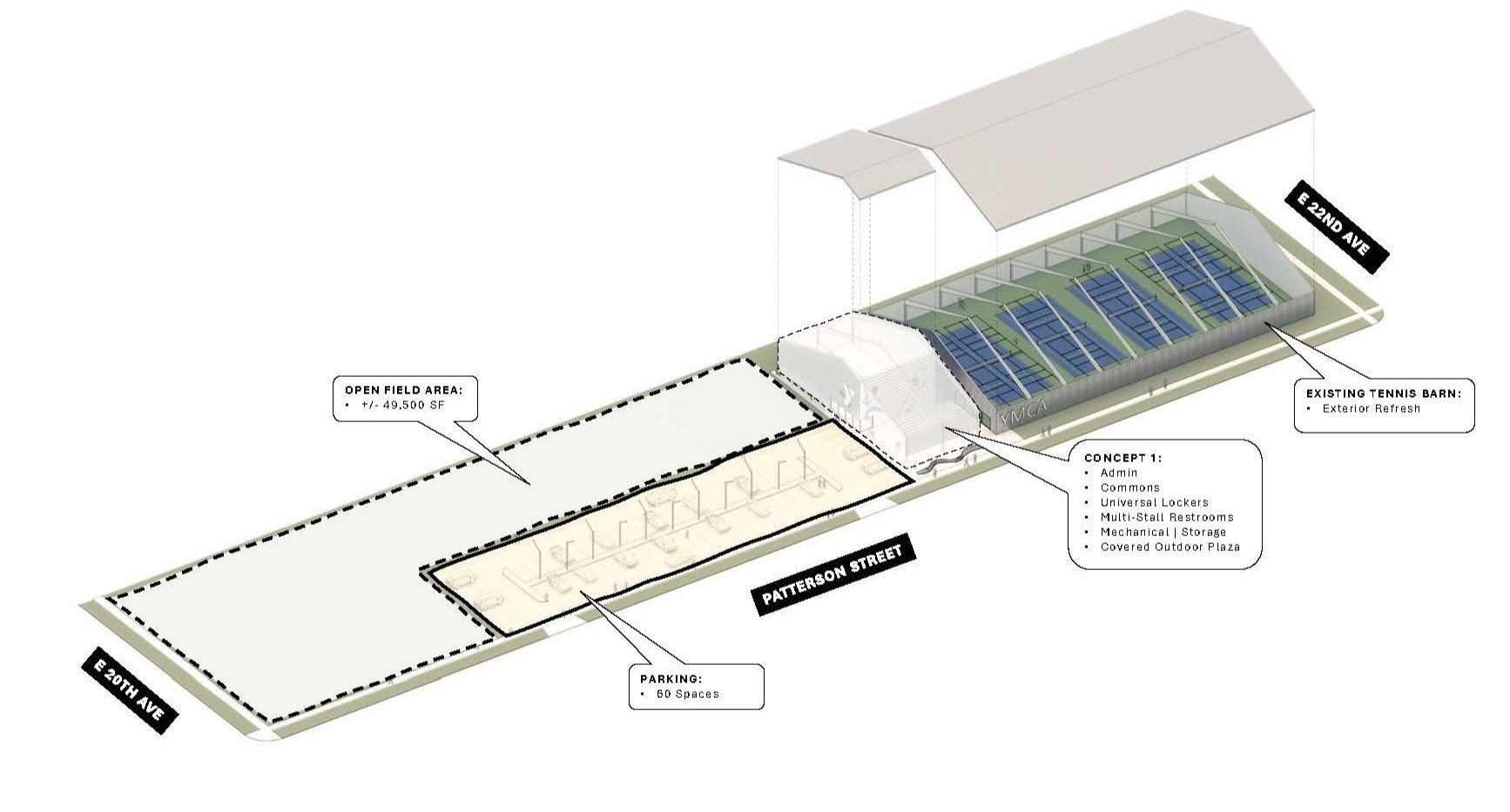
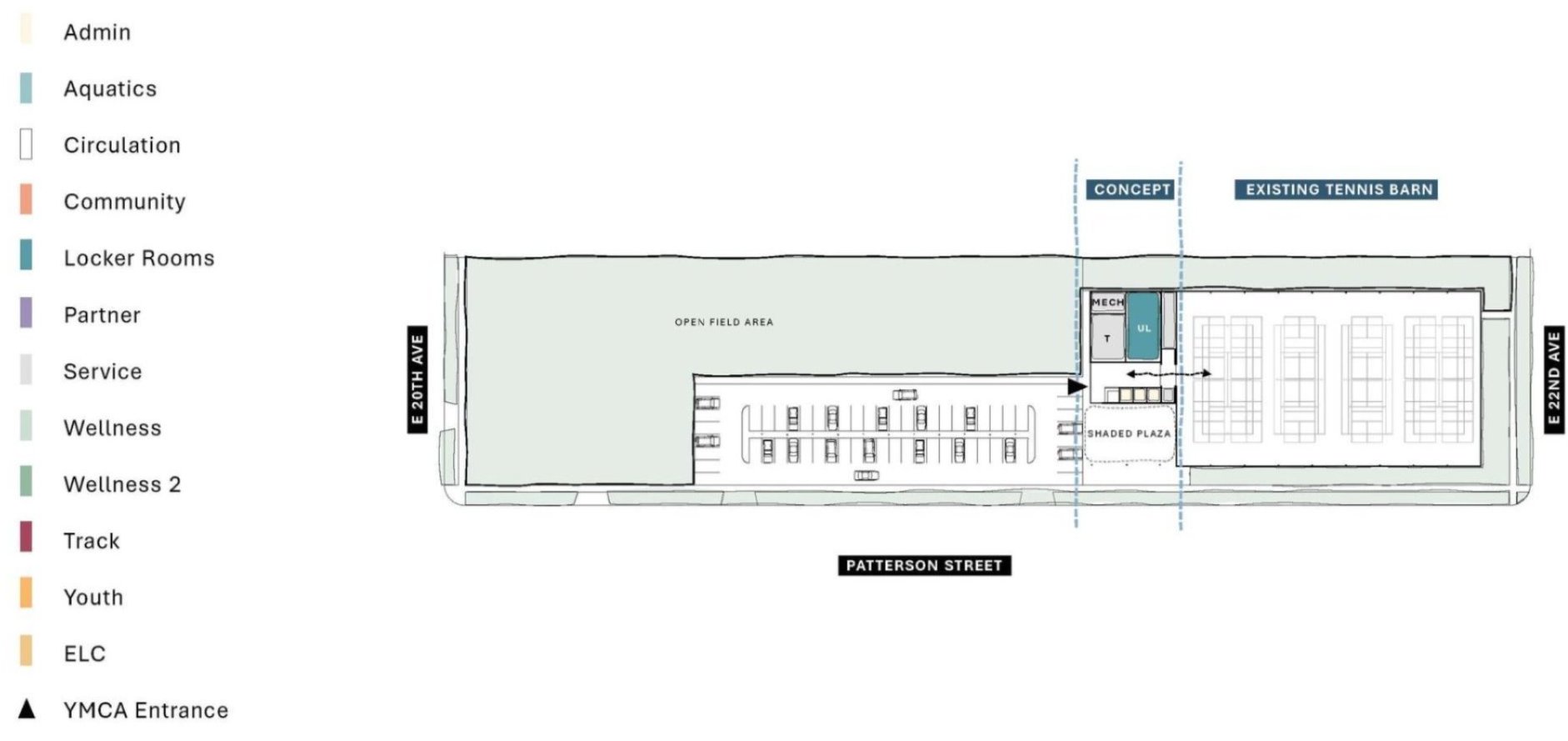
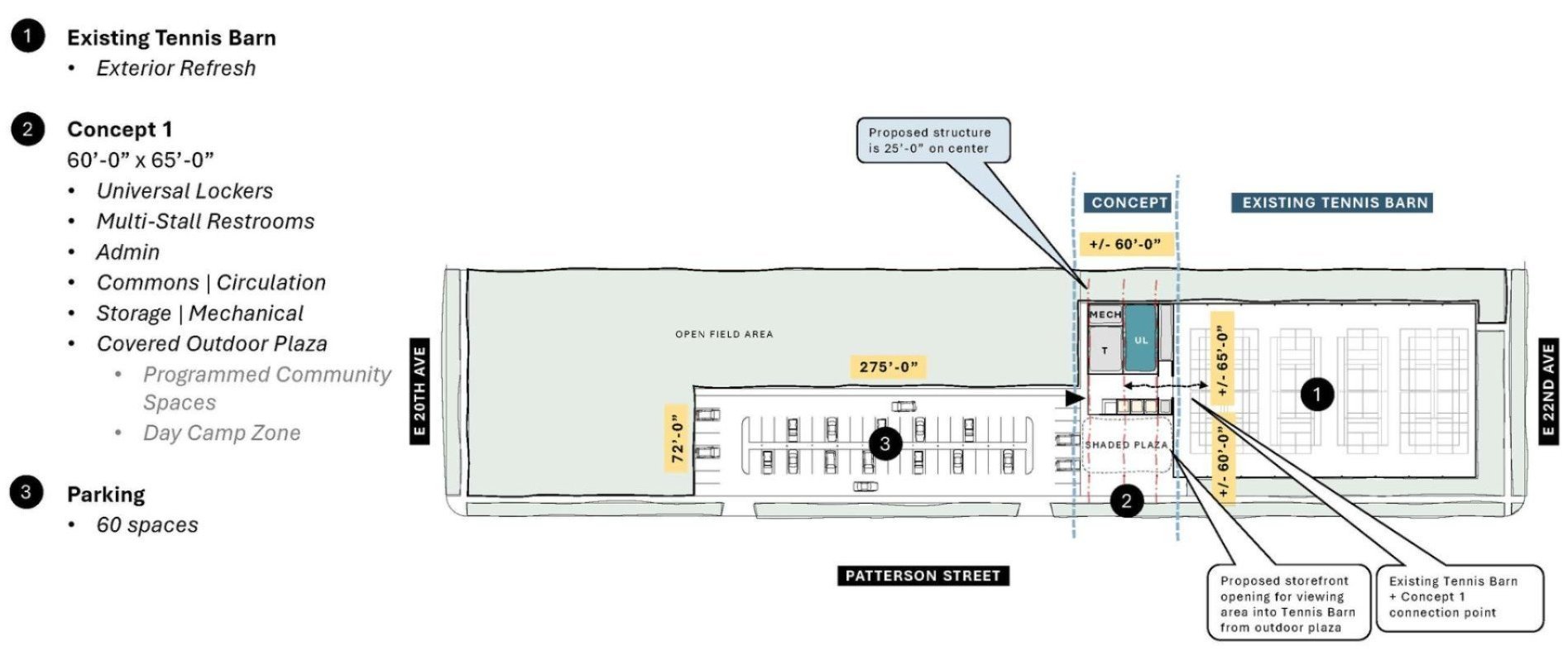
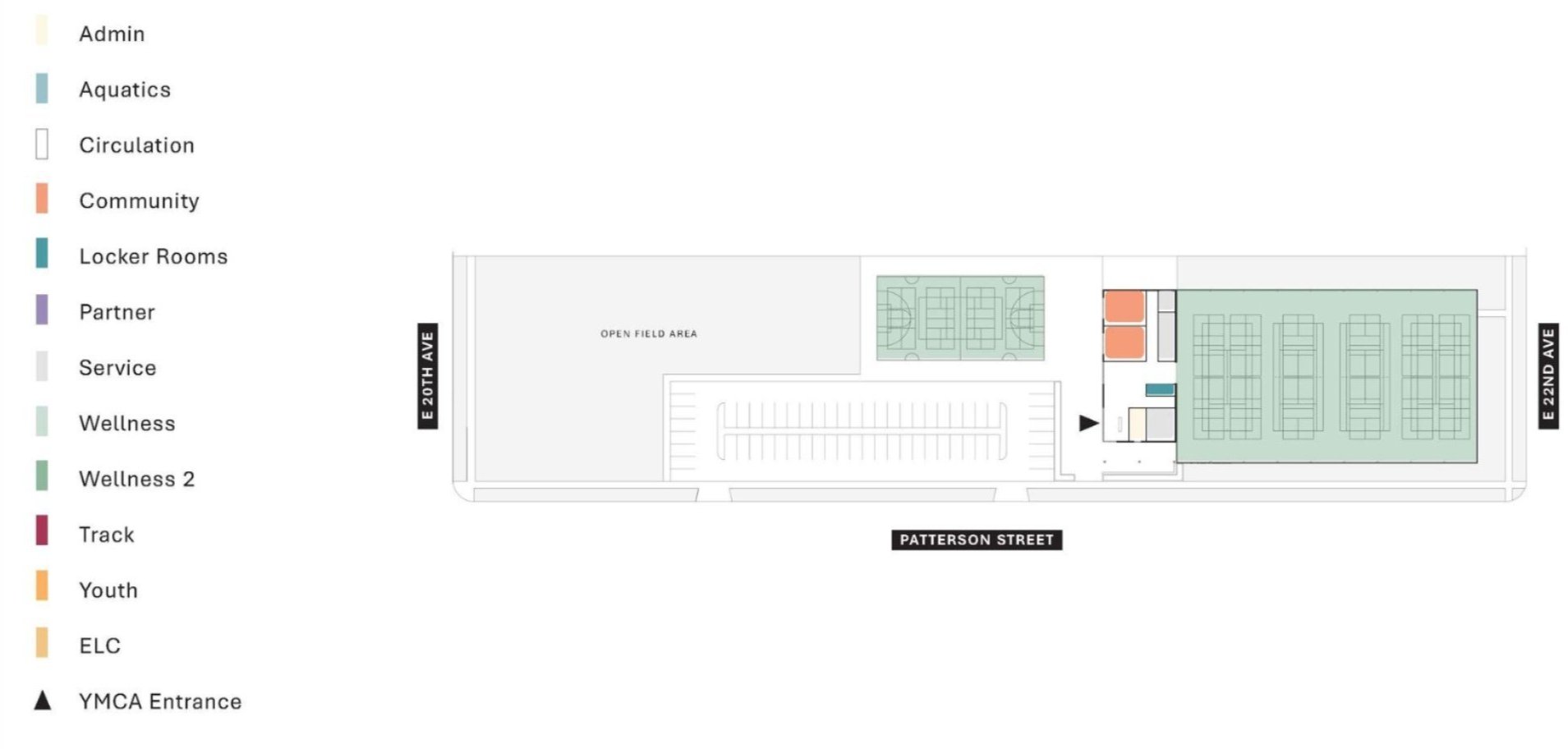
Concept #1 was a baseline approach focused on addressing pressing facility updates while keeping costs as low as possible. Estimated cost: $2.5 – $3.5 million. Because this concept focused primarily on renovation rather than expansion, it would not significantly grow services. Concept #1 included:
- Court resurfacing (courts are nearing end of life since the 2016 remodel)
- New lighting (the current lights are no longer manufactured and repairs are frequent and costly)
- New exterior siding
- A somewhat expanded lobby
-
Expanded office space
- Expanded bathrooms
- A few private locker rooms similar to those at the Stathos Y
- A shaded plaza
-
Expanded parking for 60 vehicles (currently 38)
- An open grass or turf field where much of the former Y building stood
CONCEPT #1 IMAGES: |
|
|
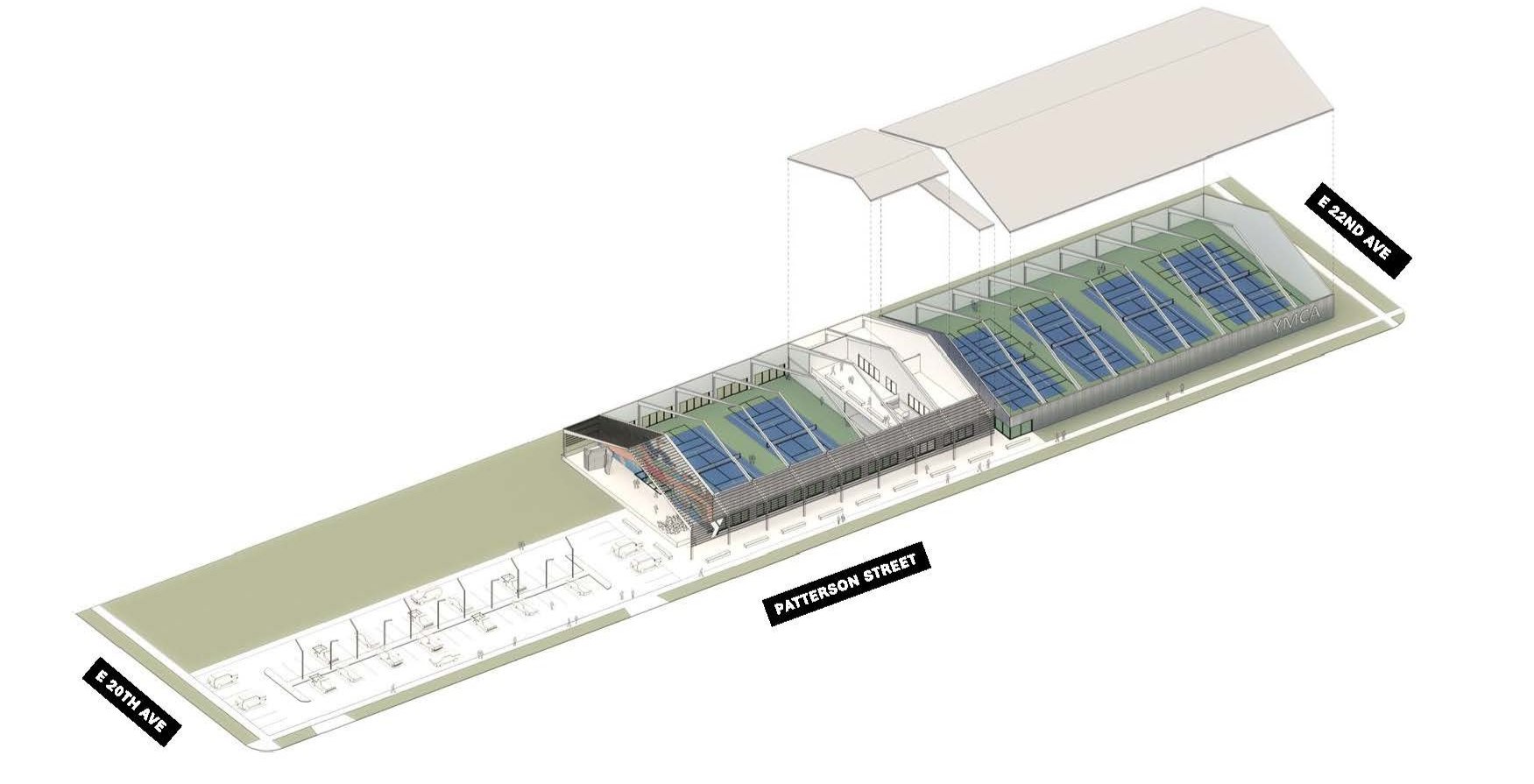
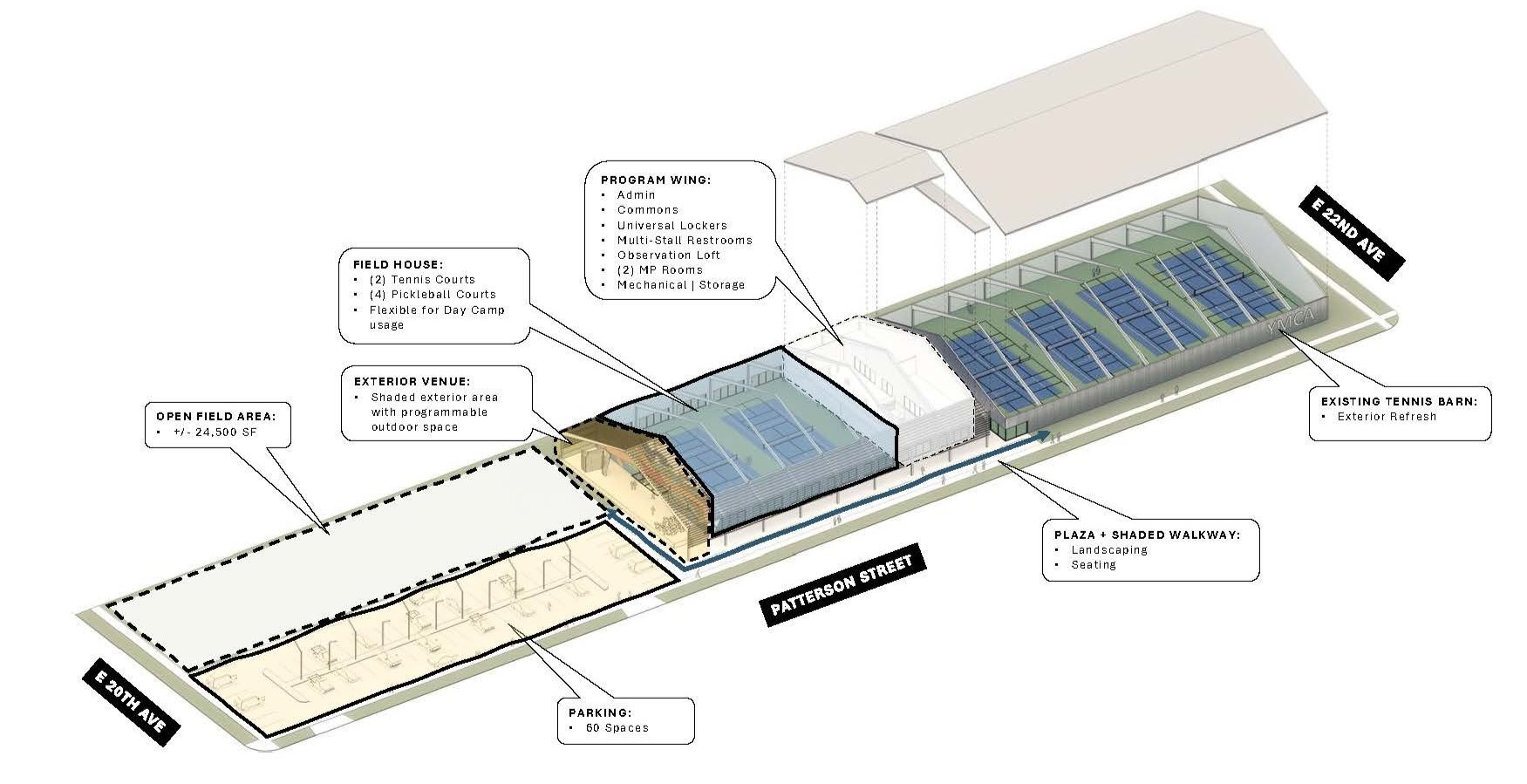
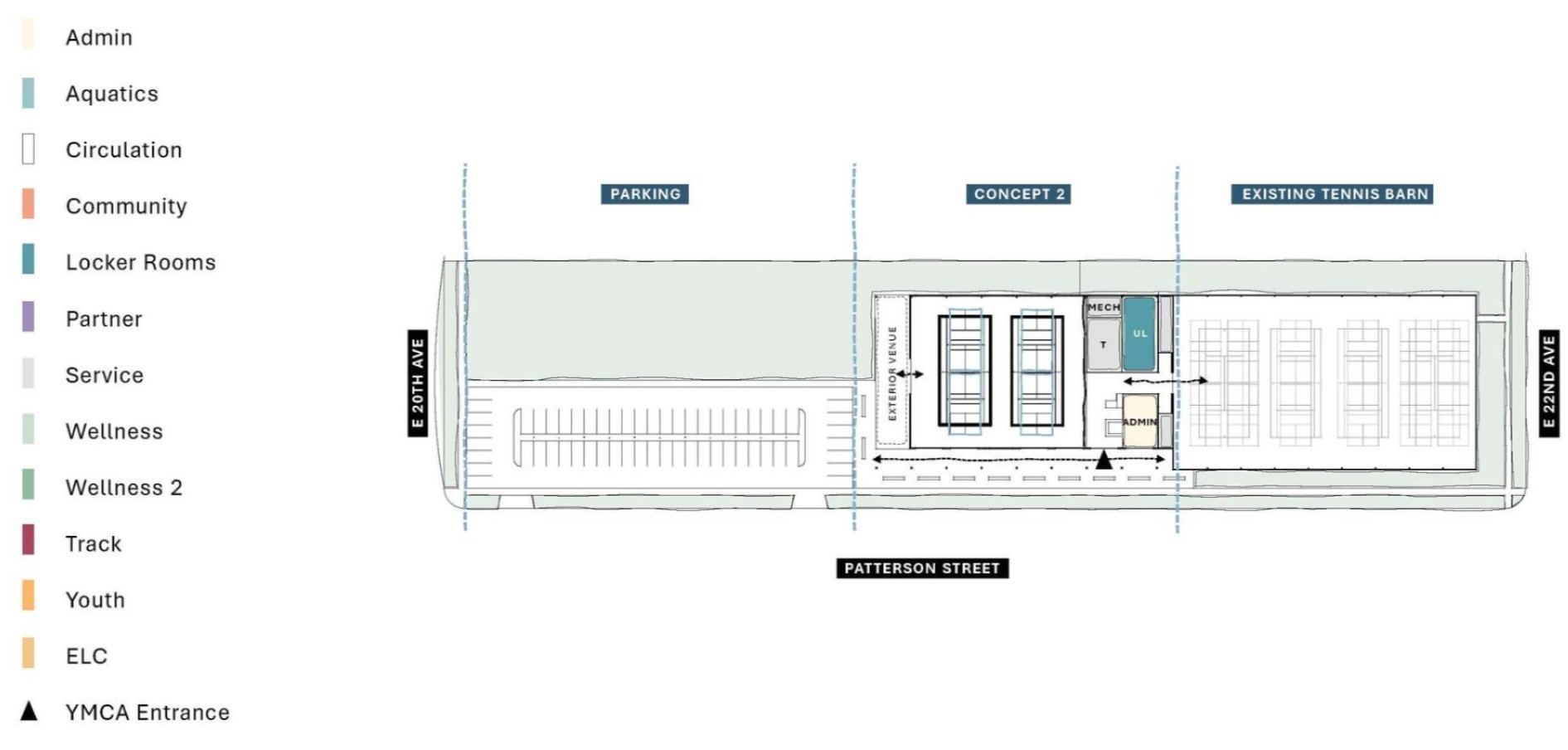
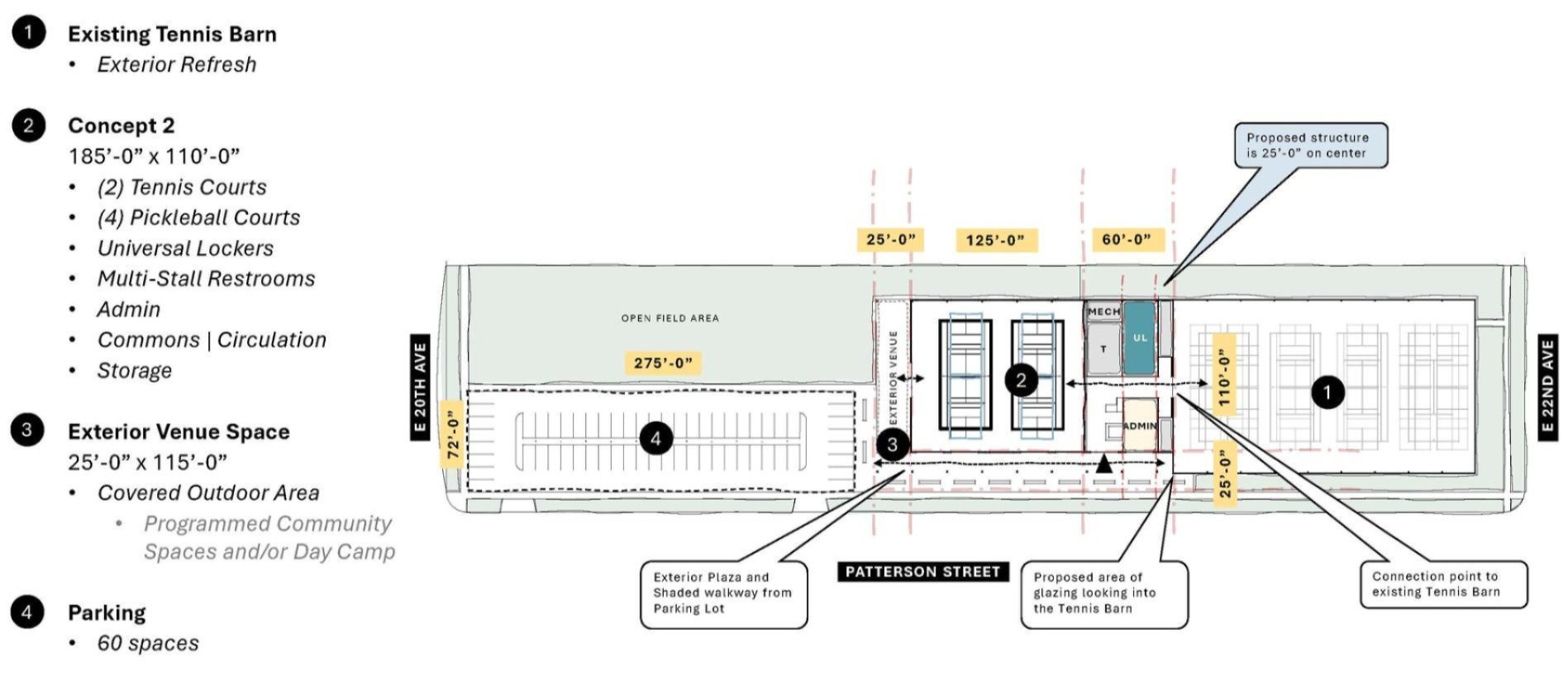
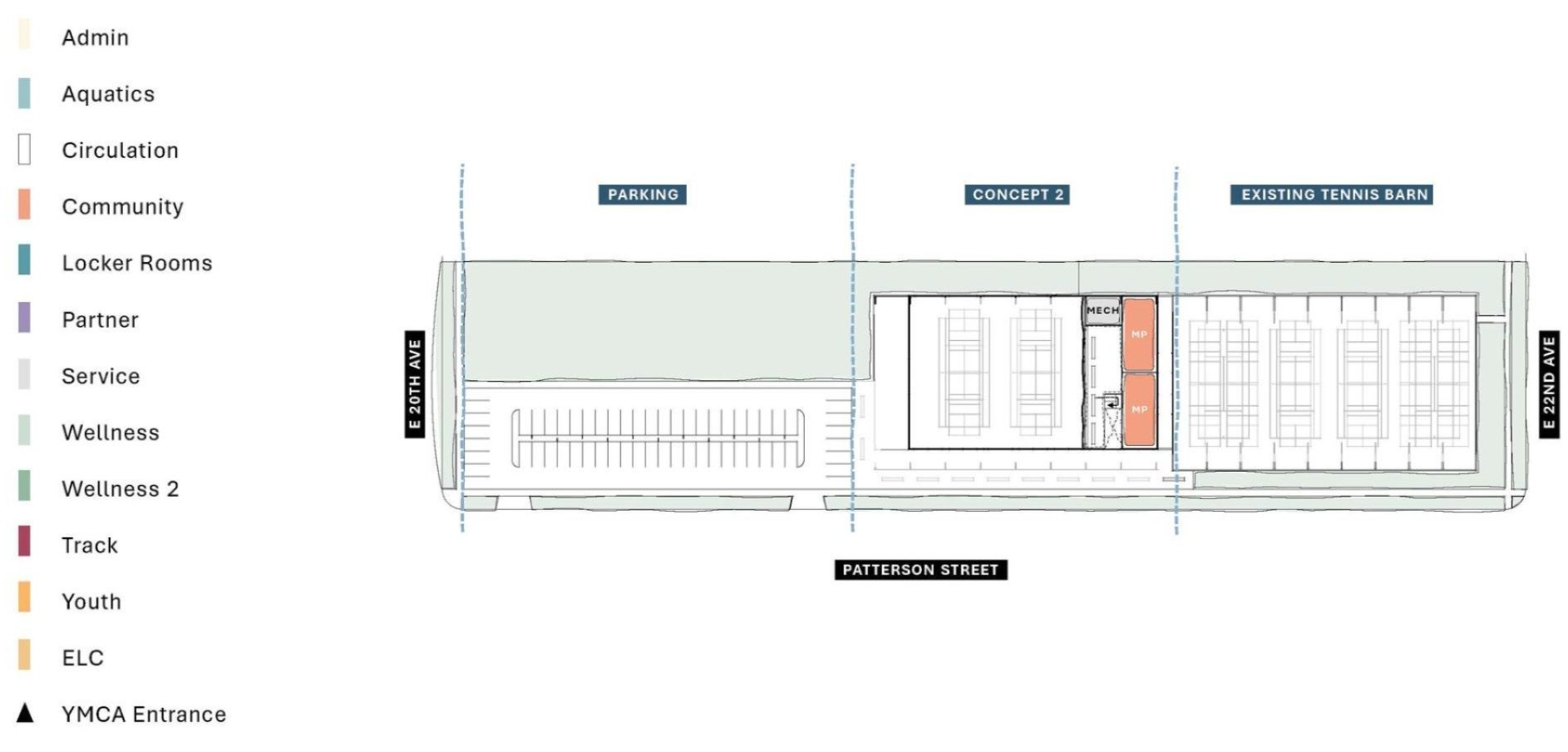
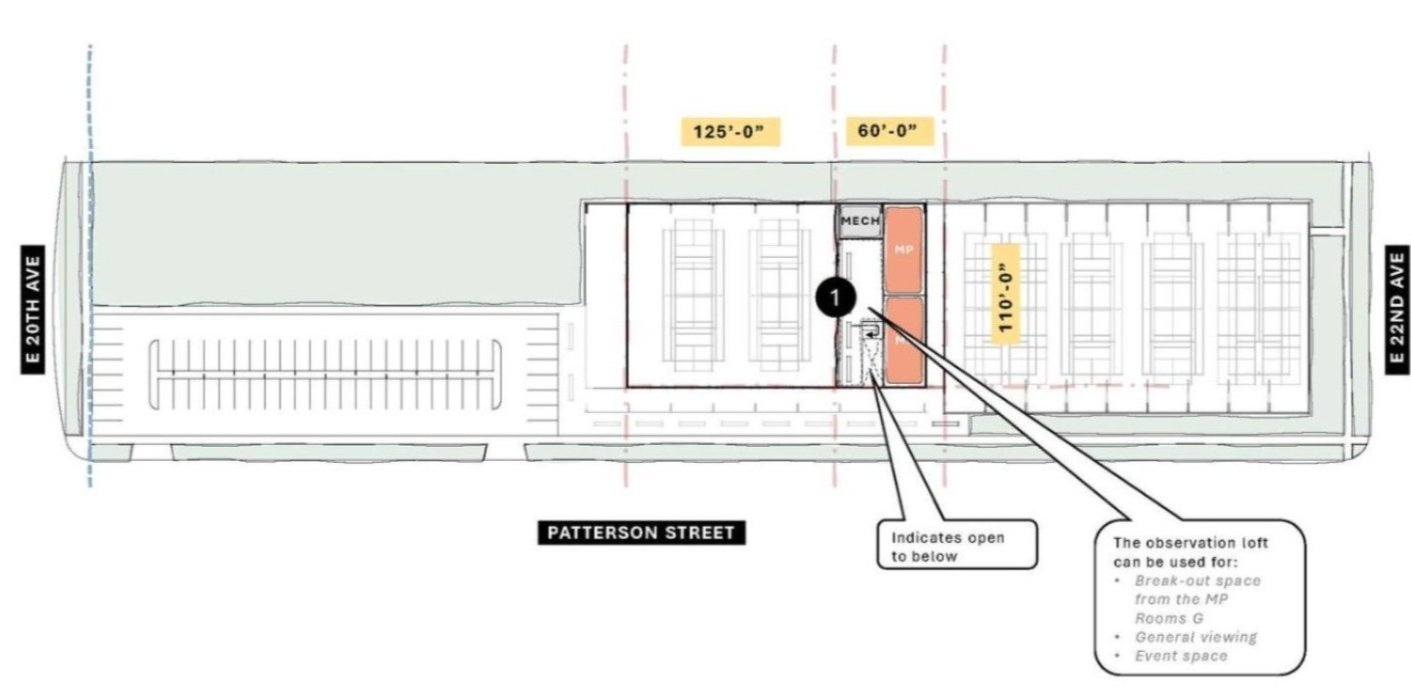
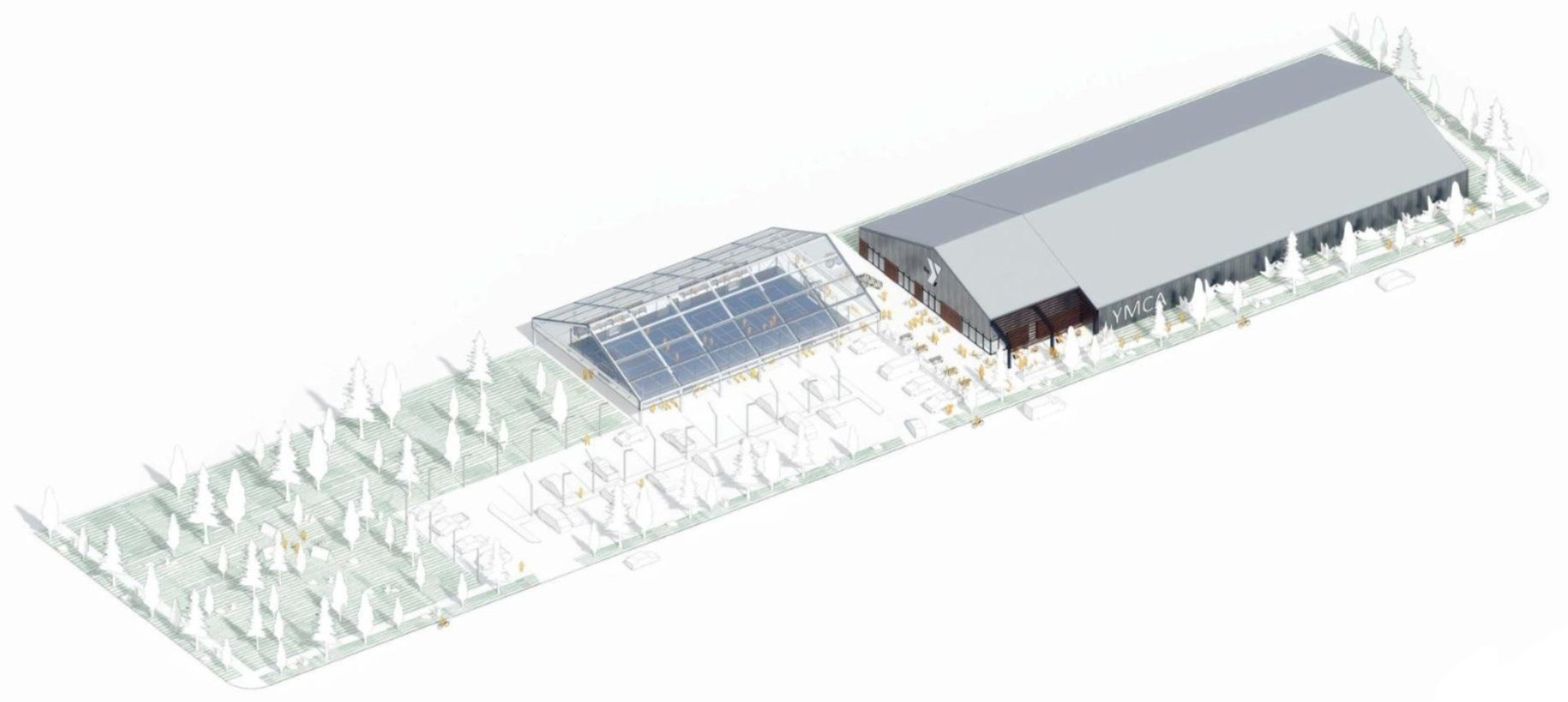
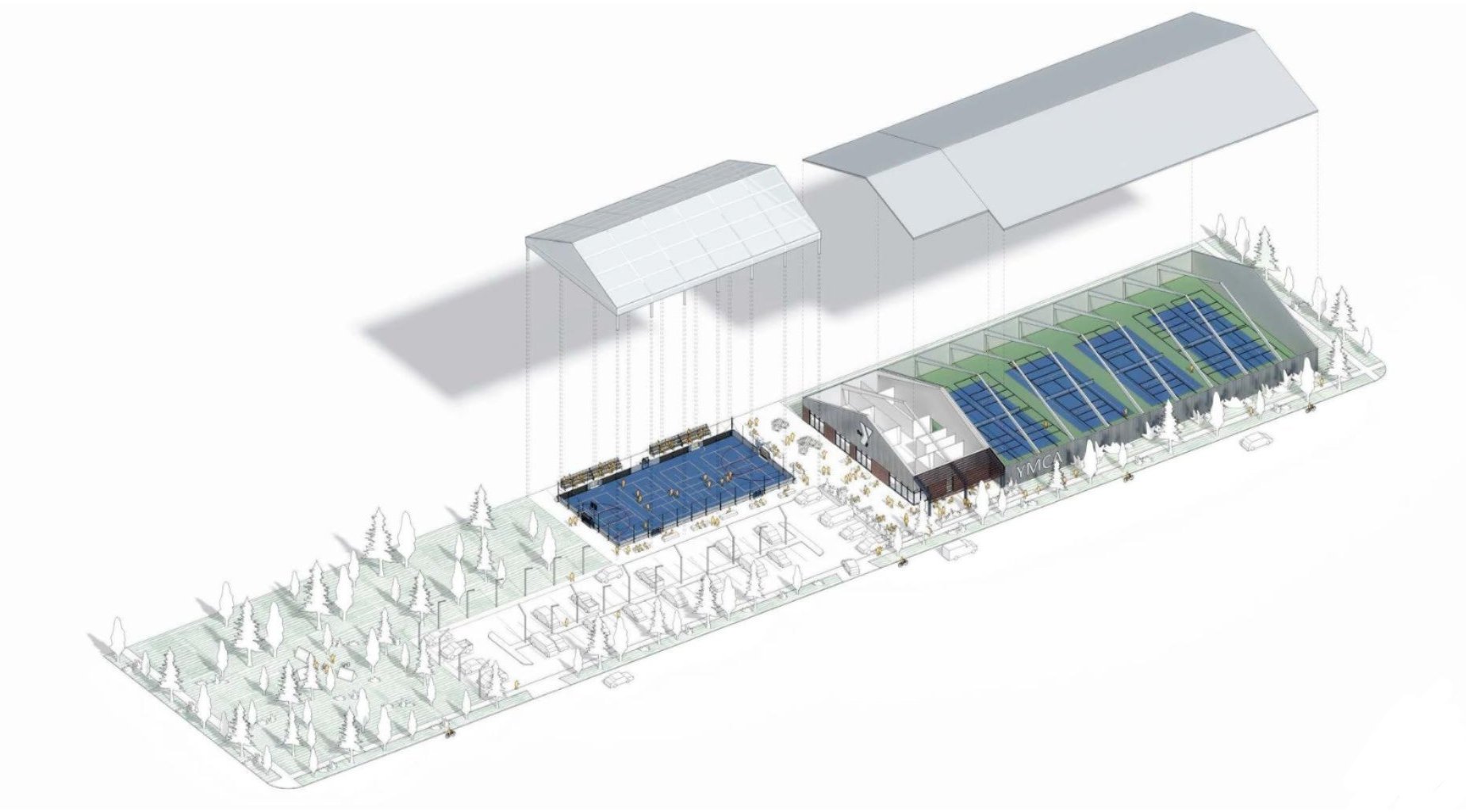
Concept #2 included two additional indoor tennis courts along with broader facility improvements. Estimated cost: $11.5 – $13.5 million. Concept #2 included: - Most elements from Concept #1
- A significantly larger lobby
- A second-floor observation loft
-
Two second-floor multipurpose rooms of roughly 1,300 square feet each
CONCEPT #2 IMAGES: |
|
|
We also reviewed a detailed estimate from September 2019 for constructing four additional indoor tennis courts modeled after the current Tennis Center. That estimate was $4.2 million but did not include needed updates to the existing center or soft costs. We estimate with all costs it would have been $5 to $5.25 million.
However, several realities shaped our thinking.
Construction costs have increased dramatically since the pandemic. For example, the Stathos Y was estimated at $20 million in 2016, $34 million by 2019, and ultimately cost roughly $49 million when completed.
The 2019 estimate also did not include improvements to the existing Tennis Center such as expanded bathrooms, locker rooms, lobby space, siding, structural repairs, court resurfacing, HVAC, and other upgrades.
These realities suggested that Gro’s estimates, while preliminary, were not disconnected from current construction conditions. |
|
|
Court Usage and Community Questions |
|
|
As discussions continued, several questions emerged about pursuing a project costing $11.5–$13.5 million. -
We considered whether the pickleball community would strongly support expanded offerings at the same time the Emerald Valley Pickleball Club is working to build a major pickleball complex at Lane Community College. Our Y has long supported pickleball and has written letters of support to potential funders for that project. We also recognize that many pickleball-focused philanthropists will naturally focus their support on that effort.
- We also considered whether tennis-focused donors alone would support the scale of fundraising required for Concept #2, and whether philanthropists who do not play tennis or pickleball would support a project whose primary expansion served those sports.
-
Finally, we considered whether expanding tennis facilities represented the highest and best use of a rare community land resource.
Simultaneously, we analyzed court usage after frequently observing empty courts.
-
We found that reservations and private lessons dominate the schedule, leaving relatively few opportunities for broader participation. This runs counter to guidance from the U.S. Tennis Association, which emphasizes maximizing community access.
-
We also found that a relatively small number of households use the facility the majority of the time. While the average Tennis & Pickleball Center member visits about six times per month, the top ten households average nearly thirty visits per month.
-
Additionally, beginners and returning players largely lack entry points outside of private lessons, which does not align with the Y’s mission to provide accessible entry into healthy activities.
Equity is not simply about whether courts are technically available. It is about whether access patterns allow youth, families, beginners, and new participants to meaningfully engage in the sport. |
|
|
These discussions led to Concept #3.
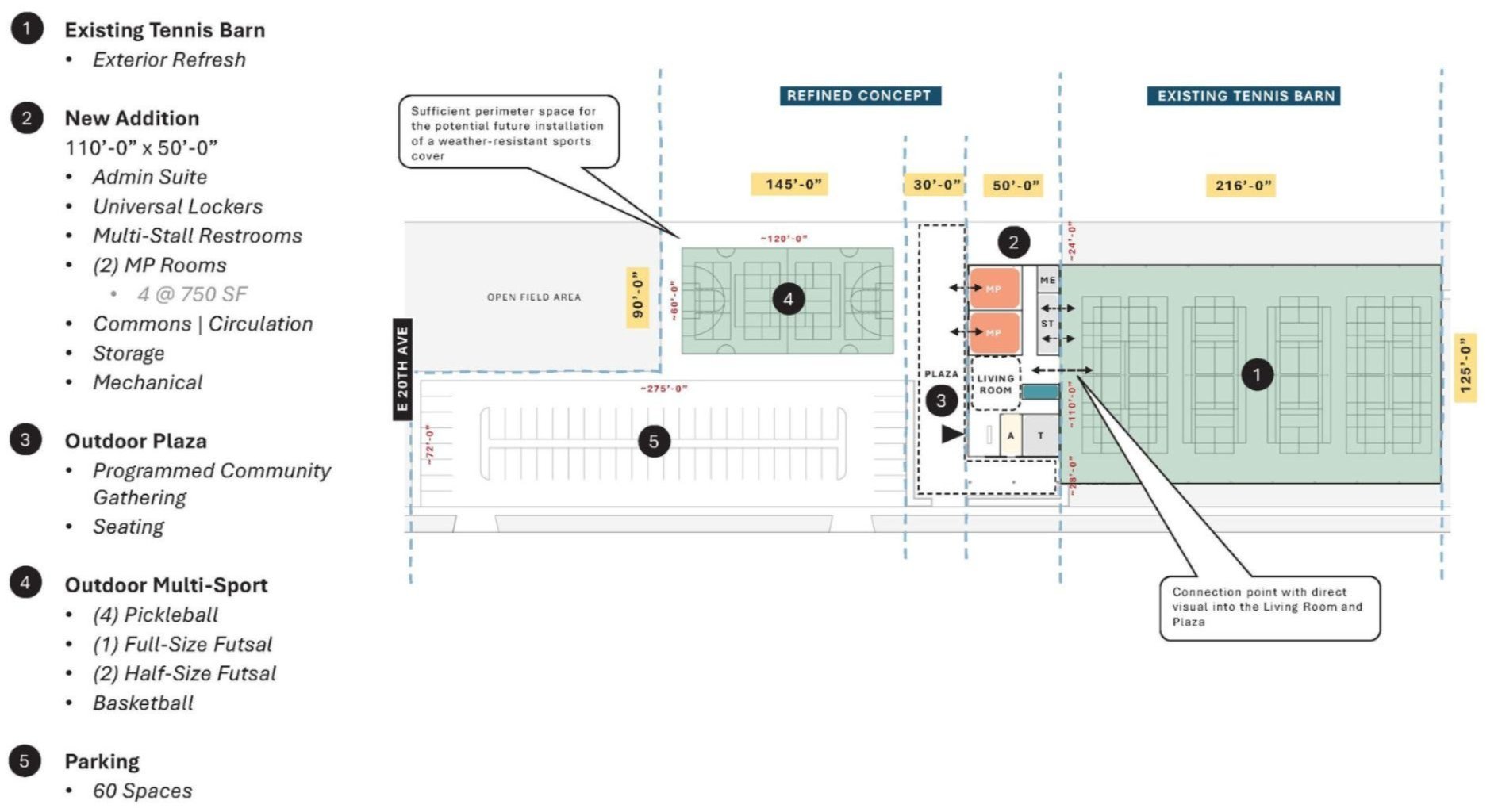
Estimated cost: $3.5 – $4.5 million. Concept #3 included most items from Concept #1 plus: - A significantly larger lobby
-
Two large multipurpose rooms (1,500 sqft and 800 sqft)
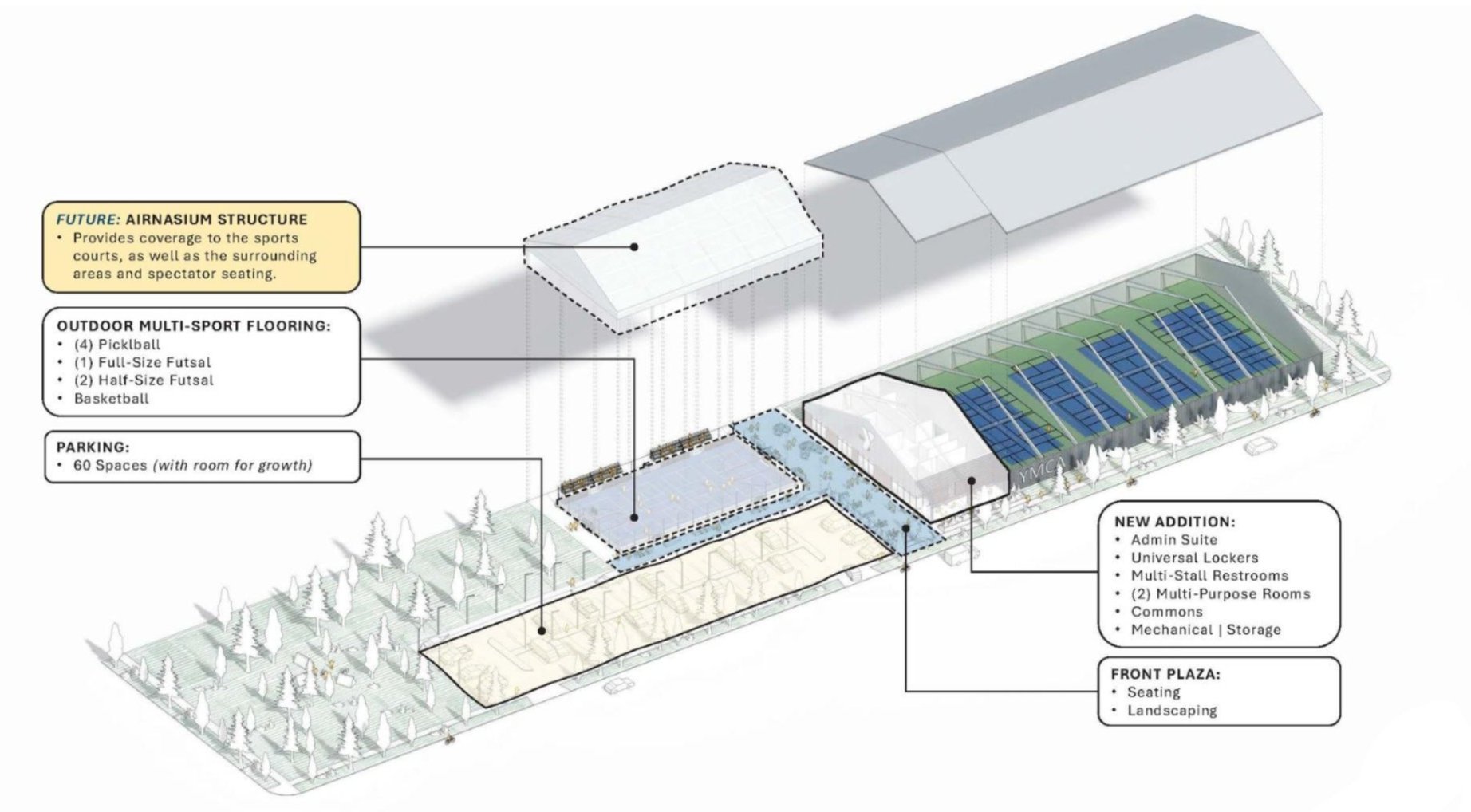
- An outdoor multi-use court focused primarily on pickleball
CONCEPT #3 IMAGES: |
|
|
During the summer of 2025, we moved away from Concept #3 because the outdoor pickleball focus raised concerns about potential neighborhood noise impacts. In July 2025, local news articles highlighted lawsuits related to pickleball noise at Westmoreland Park, reflecting a broader national trend. |
|
|
Re-centering Our Priorities |
|
|
After reviewing Concept #3, the CATF paused to reassess our priorities.
We gathered additional community insights, reflected on feedback from stakeholders, and narrowed our focus around several key pillars. |
|
|
| The Patterson project must address the childcare crisis in our community.
The need for additional childcare resources has been consistently highlighted by families, businesses, and community leaders. |
|
|
| The Y currently provides licensed afterschool programming in 21 schools serving 22 schools. Many sites have open space, but schools in southeast Eugene—those closest to Patterson—have long waiting lists. At the start of the most recent school year, more than 200 children were on afterschool waitlists for southeast Eugene elementary schools. Licensing limits prevent us from serving more children within those schools.
Children should not need to travel across the city to access afterschool care. A neighborhood-based solution is needed, and the Patterson property is ideally positioned to help meet that need. |
|
|
|
The Patterson project must also remain financially responsible given the significant investment already made in south Eugene and the reality that the Y’s next major campaign will focus on Bethel, River Road, Santa Clara, and north Gilham.
The project must serve as many people as possible and address broad community needs. |
|
|
| Finally, the project must provide reliable access to programming space. |
|
|
While we are not including Concepts 4 to 6 in detail here, they represent incremental adjustments as we moved away from court-focused solutions and toward spaces that better meet broader community needs. In Concept 2, we explored adding more indoor courts but found the projected costs too high.
In Concept 3, we evaluated an outdoor pickleball court. While more affordable, potential neighborhood noise made it impractical.
These findings led us to move away from court-focused solutions and refocus on how the Patterson property could serve broader community needs. In particular, we saw an opportunity to create space that supports child care and youth programming leading to Concept 4.
Concept 4 introduced four large multipurpose rooms to support this shift. However, the room sizes and supporting infrastructure still required refinement.
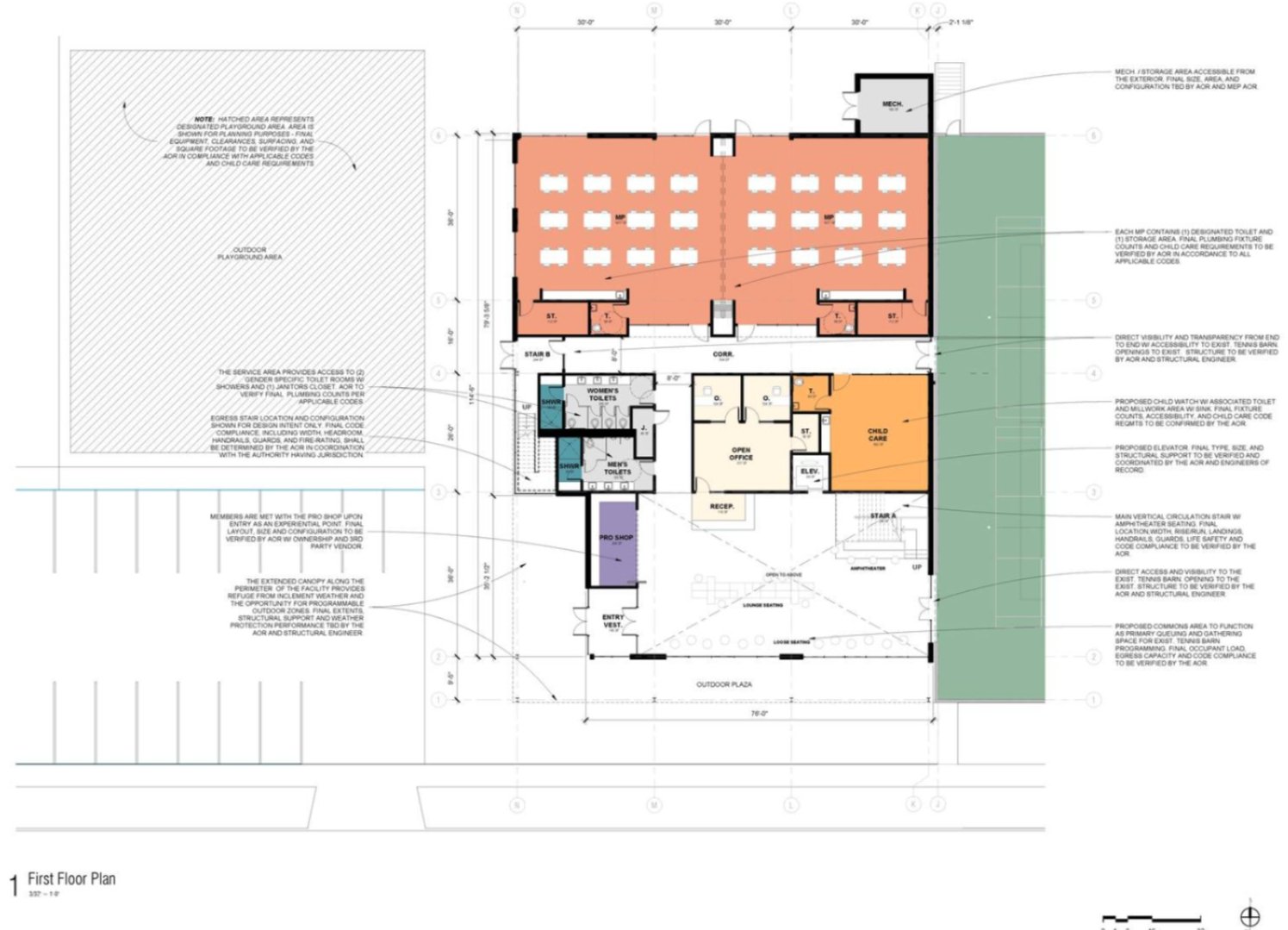
Concepts 5, 6, and ultimately 7 built on that foundation. Rather than introducing new ideas, these iterations refined the details—expanding room sizes to serve up to 45 children at roughly 35 square feet per child, adjusting bathrooms to meet licensing requirements, improving exits and circulation, and refining the entrance and layout of surrounding spaces.
|
|
|
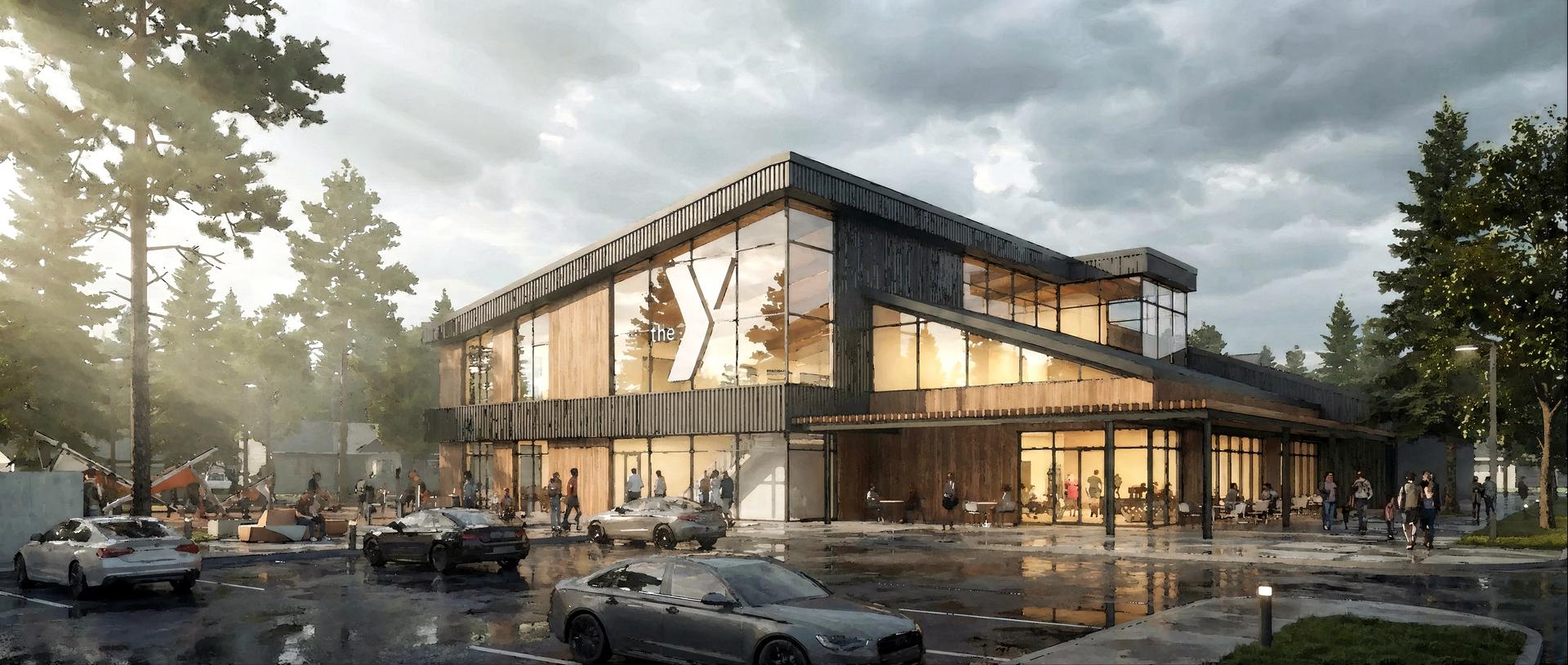
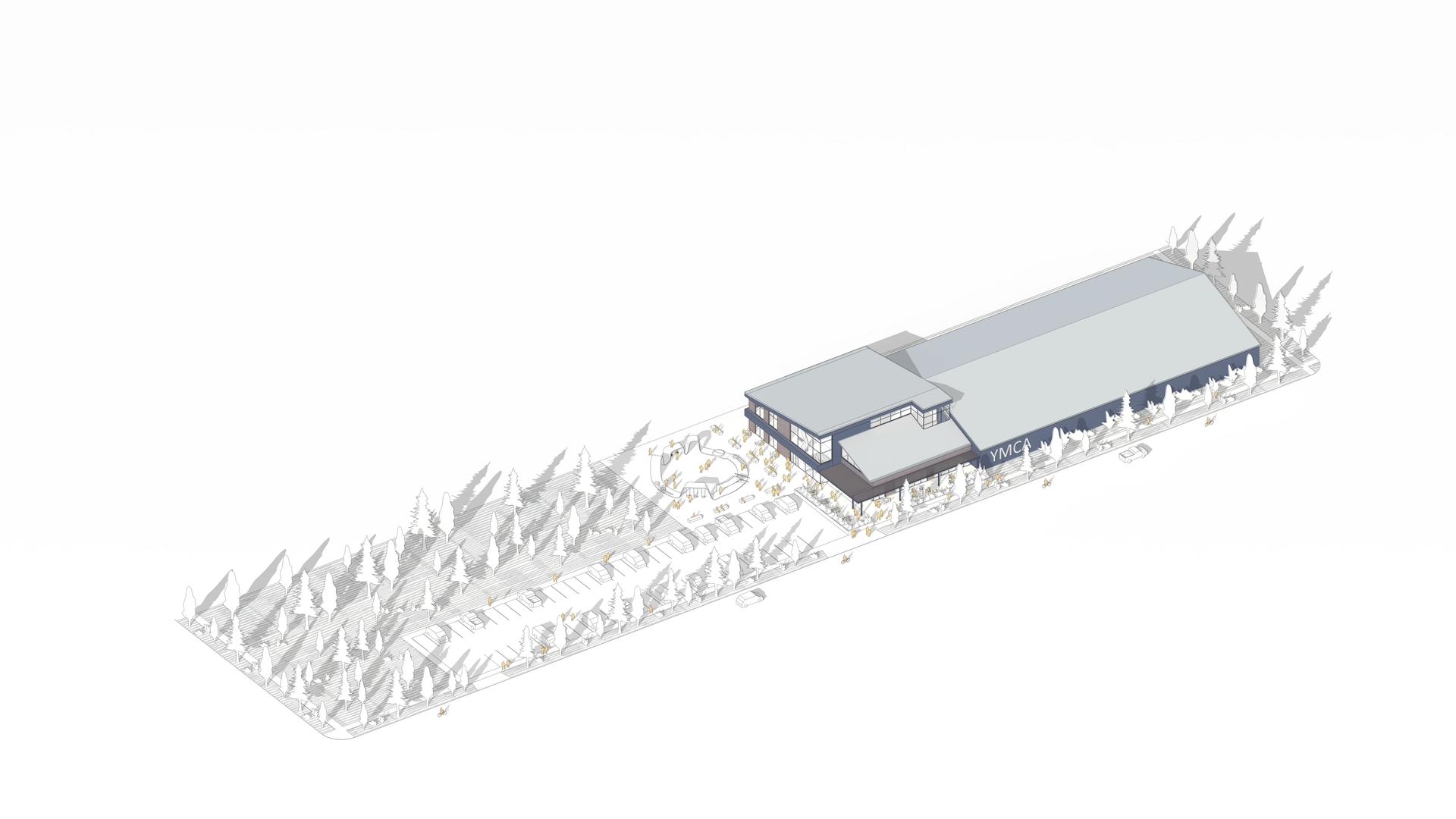
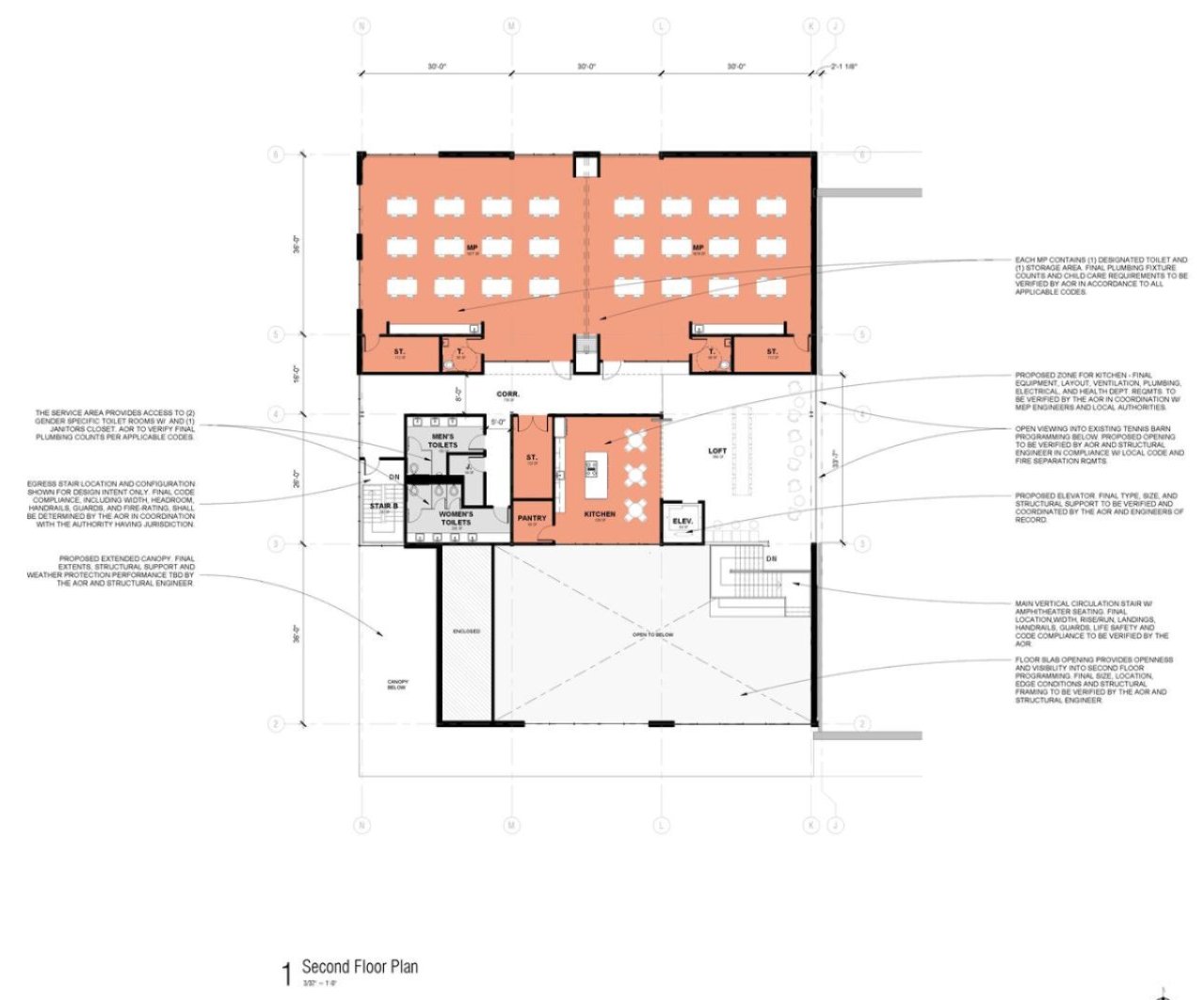
These priorities ultimately led to Concept #7, developed in December 2025.
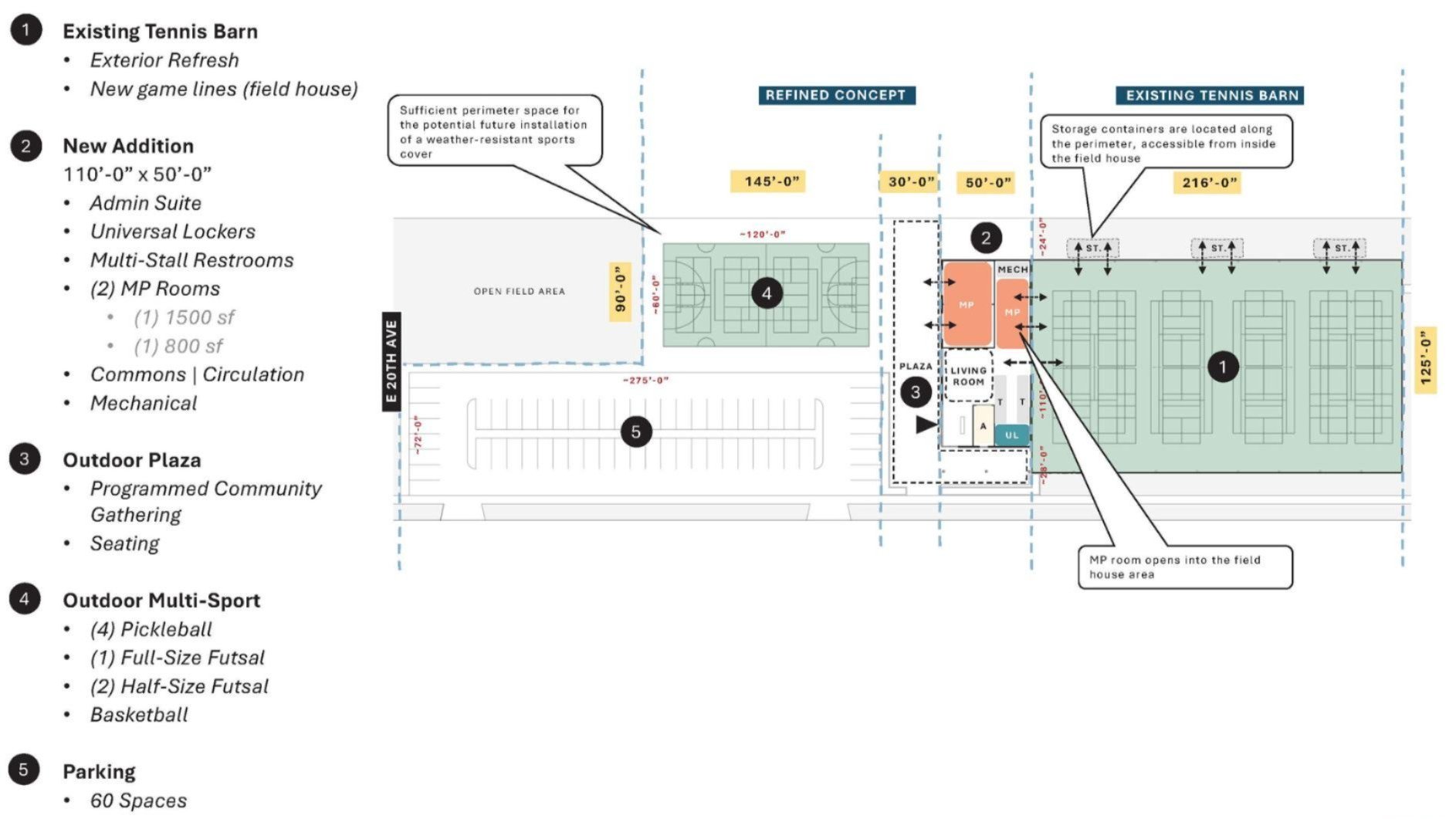
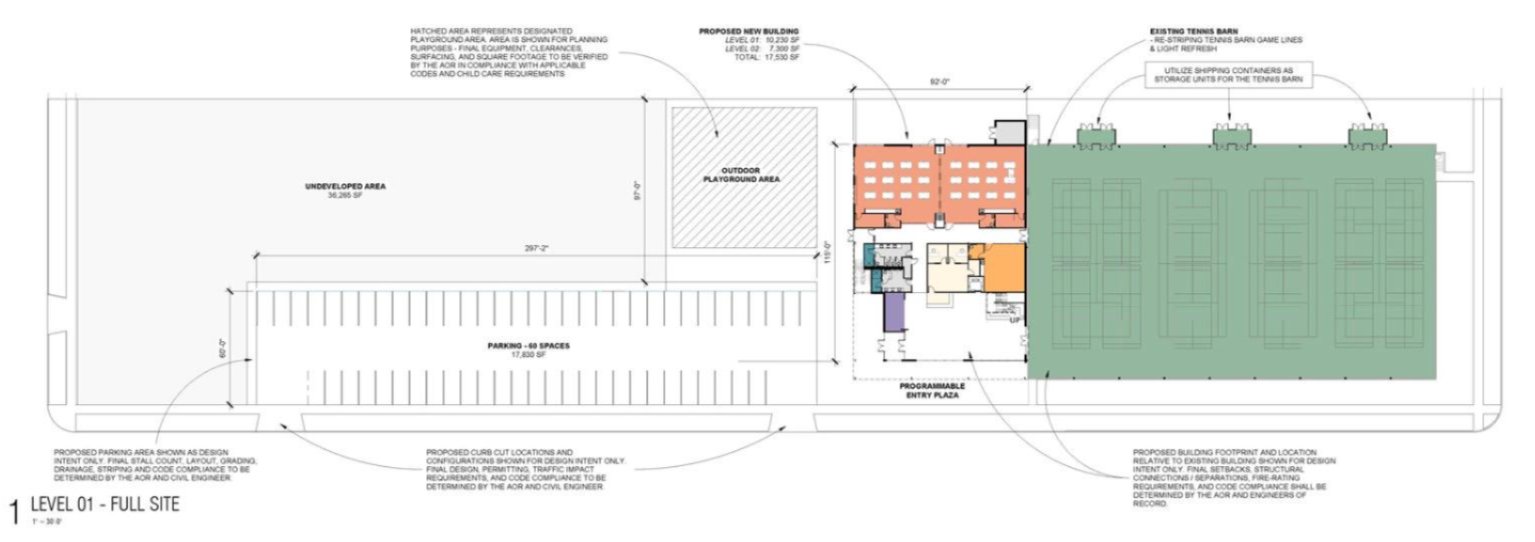
Concept #7 includes: - Many updates from Concepts #1 and #2 such as expanded parking, barn interior updates, new siding, improved lobby spaces, and expanded locker rooms
-
Four large 1,600-square-foot multipurpose rooms meeting childcare licensing standards
- A licensed childcare playground
- A large grass or turf field for youth sports, camps, afterschool programs, and community activities
These multipurpose rooms would allow the Y to: - Serve 180 children in summer camps, increasing capacity by roughly 40%.
- Create 180 new licensed afterschool spots for southeast Eugene families.
- Serve
180 children on no-school days, increasing capacity by roughly 33%.
- Provide space for
80–100 additional group fitness participants per hour during morning hours when the Stathos Y is already at capacity.
- Provide additional space for community events, lectures, meetings, and social gatherings—areas where demand already exceeds available space.
CONCEPT #7 IMAGES: |
|
|
In November and December 2025, we worked with two local contractors to gather high-level estimates for Concept #7. These estimates ranged from $8.4 to $9.9 million. Including furniture, equipment, and other project costs, we currently estimate the total project cost to be approximately $9–$11 million. |
|
|
Based on our research and analysis, several conclusions are clear. Every generation of Y leaders has a responsibility to steward the Y’s assets in ways that create the greatest community impact. We believe the most important use of the Patterson property is helping address the childcare needs associated with camps, afterschool programs, and no-school days.
We also believe that a capital campaign significantly larger than $8–$11 million would likely be inappropriate given the recent investments already made in south Eugene.
At the same time, we believe the programming of the Tennis & Pickleball Center deserves thoughtful examination.
Throughout our history, the Y has continually evolved—from serving lumber camps by train, to downtown facilities, to the Patterson campus itself. Each generation has adapted the Y’s resources to meet the needs of its time.
Since our first meeting in University Hall on April 22, 1887, Y leaders have consistently demonstrated loyalty to people and community needs—not to specific programs or spaces.
This same philosophy guided the development of the Stathos Y. We have often said that future generations should adapt that facility as their needs evolve, just as we are doing today.
During 2025 we also increased member check-ins at the Tennis & Pickleball Center to better understand usage.
Even with improved tracking, the facility currently averages fewer than 100 visits per day and serves fewer than 500 visitors per month. These numbers raise important questions for today’s Y leaders.
- Would we strengthen or weaken community trust if we avoided examining how a 27,000-square-foot facility is used when it averages about 94 visits per day?
-
Would we strengthen or weaken community trust if we launched a capital campaign to expand a facility that may serve only 100–200 visits per day?
|
|
|
In March we will launch a large community listening project to better understand how the community would like to see the Y expand services in north Eugene and on Patterson.
This effort will include hundreds of phone interviews and surveys sent to tens of thousands of households. The survey link will be distributed by Triangle2 and the YMCA beginning Friday, March 13. |
|
|
WE SPECIFICALLY WANT FEEDBACK ON: -
What programs or services the community would like to see in the Patterson multipurpose spaces
- Whether the community values the current programming model of the Tennis & Pickleball Center or whether the community wants the Y to repurpose it
-
What Healthy Living, Youth Development, or Social Responsibility priorities the community would like the Y to emphasize
|
|
|
The survey results will be compiled and presented to the Y’s board in early April.
After the community helps shape the vision, the board will refine the concepts developed with Gro. We will then conduct a donor feasibility study in late spring and early summer.
Using community and donor feedback, we will finalize the vision for these capital campaigns, with the goal of launching the Patterson campaign toward the end of 2026.
As we pursue this vision, we are excited about the opportunity to create a more vibrant and impactful community hub—one filled with learning, laughter, athletic activity, connection, and community-building programs anchored in addressing real community needs.
We are inspired to continue the legacy of developing the Patterson property in meaningful ways, just as Y leaders have done since 1953.
We know this overview may raise questions. Please find included with this letter a list of frequently asked questions we have compiled.
Thank you for being part of the Y’s ongoing effort to build a healthier, more connected, and more engaged community. With gratitude, |
|
|
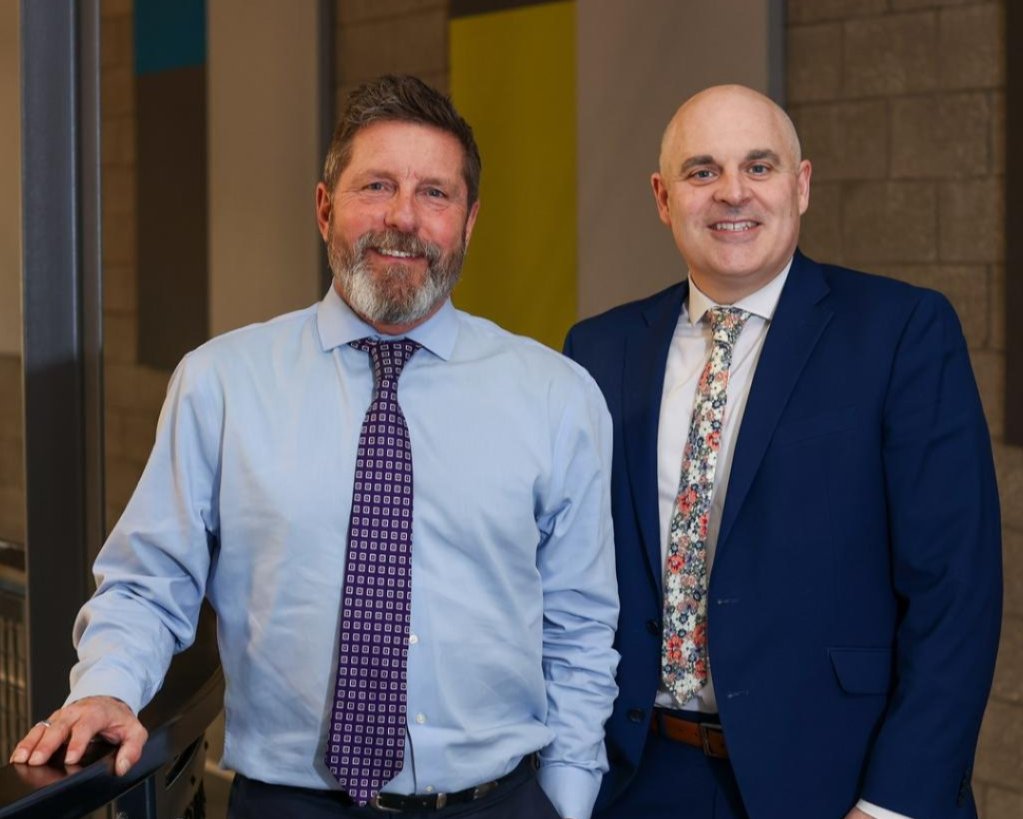
Brian Steffen CEO
Eugene Family YMCA |
|
Matt Longin Board Chair Eugene Family YMCA |
| |
|
Eugene Family YMCA
Empowering youth to reach their full potential, improving individual and community well-being, and inspiring action and giving back in our communities. |
|
|
|